Describe How Northern Abolitionists Reacted to the Fugitive Slave Act
The Act was one of the most controversial elements of the 1850 compromise and heightened Northern fears of a slave power conspiracy. This is because it supported the cause they were against.

Fugitive Slave Acts History
They claimed that Northerners would not be so eager to abolish slavery.
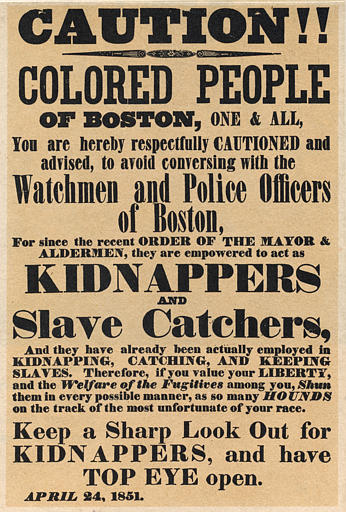
. Lithograph on wove paper. Northern Abolitionists did not react favorably to the Fugitive Slave Act. How did the northern abolitionist reacted to the fugitive slave act.
May abolitionists openly defied the law and the underground railroad became more discreet. Harriet Tubman did not allow the law to affect her. The Fugitive Slave Act of 1850 ignited the abolitionists of the North and caused the issue to create a lightning rod of controversy.
Image An impassioned condemnation of the Fugitive Slave Act passed by Congress in September 1850 which increased federal and free-state responsibility for the recovery of fugitive slaves. Some abolitionists such as Frederick Douglass believed that standing up against the law necessitated active resistance. It was the Compromises Fugitive Slave bill that garnered the most attention in the North.
How did the Northern abolitionists react to the Fugitive Slave Act. Northern Abolitionists did not react favorably to the Fugitive Slave Act. Outsiders corrupted the election and fighting broke out over the results.
Abolition was pretty far from a good deal of peoples minds. The measure strengthened the Fugitive Slave Act of 1793 which granted jurisdiction to all state and federal judges over cases regarding fugitive slaves. Northerners bristled at the idea of turning their states into a stalking ground for bounty hunters and many argued the law was tantamount to legalized kidnapping.
In 1793 and then in 1850 the Fugitive Slave Acts were passed in US. The law became unenforceable among the Northern states. While Southern slave owners supported the Fugitive Slave Act of 1850 it angered many people who lived in the Northern states.
This is because it supported the cause they were. Alarmed and angered by Northern abolitionists who charged that the very foundations of Southern culture were evil and corrupt defenders of slavery adopted a defiant position. Dericbe how northern abolitionists reacted to the fugitive slave.
The law provided for the appointment of federal commissioners empowered to issue warrants for the arrest of alleged fugitive slaves and to. The Northern abolitionists refused to accept the terms refused to enforce it aided escaping slaves refused to convict those who helped How did popular sovereignty lead to violence in Kansas. How did the northern abolitionist reacted to the fugitive slave act.
Both the Republican and Free Soil congressmen created and proposed bills and resolutions that would repeal the Fugitive Slave acts. Prior to the passage of the Fugitive Slave Act northerners could view slavery at a distance. This is because the Northern states were less supportive of the practise of slavery and instead supported the American Abolitionist Movement.
This is because it supported the cause they were. This federal law provide for capturing and returning. It was a problem to be dealt with by southerners.
Northern abolitionists had seemed to find their voice in the 1830s and although it remained a minority voice it grew loud and disruptive enough to. Northern Abolitionists did not react favorably to the Fugitive Slave Act. Northerners bristled at the idea of turning their states into a stalking ground for bounty hunters and many argued.
The Fugitive Slave Act provoked widespread reactions in the North. There was a widespread opposition toward the Fugitive Slave Acts of 1850. 333 x 443 cm.
How northerners resist the fugitive slave act. It required that all. The Fugitive Slave Act of 1793 was immediately met with a firestorm of criticism.
The laws were enforced until the beginning of the Civil War which started in 1861. It only changed her destination to Canada rather than the Northern states. Northerners respond to the Fugitive Slave Act by enacting legislation opposing it.
The Fugitive Slave Act made it a crime not to turn in people suspected of being a runaway slave so it forced people to take a. The Fugitive Slave Act or Fugitive Slave Law was passed by the United States Congress on September 18 1850 as part of the Compromise of 1850 between Southern interests in slavery and Northern Free-Soilers. In Boston and elsewhere abolitionists tried to protect fugitives from federal authorities.
However several Northern states including Massachusetts were dissatisfied by the lack of due process in these cases and.
Social Welfare History Project Fugitive Slave Act Of 1850

Effects Of The Fugitive Slave Law The News Media And The Making Of America 1730 1865

Fugitive Slave Acts History


Comments
Post a Comment